
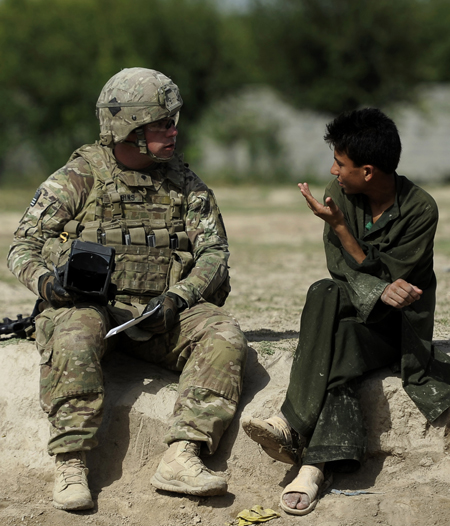
بتاریخ 20 می سال 2014 نشست عمومی کشور های عضو اتحاد ناتو در شهر شیکاگوی آمریکا برگزار خواهد شد و ناتو در تلاش است تا قبل از رسیدن تاریخ مذکور از چگونگی پیمان راهبردی میان افغانستان و آمریکا بداند تا بتواند در تصمیم گیری های بودیجوی سالانه اش افغانستان را بگنجاند و مقدار حمایت مالی و نظامی خود را برای افغانستان مشخص بسازد . چنان تصمیمی را ناتو همه ساله برای کشور های که هم پیمان شان هستند و یا تازه هم پیمان شان می گردند انجام می دهند.
قرار بود بعد از بسیار گفتگو ها توسط هیئت های افغانستان و آمریکا پیش نویس این پیمان تکمیل و بدست نشر سپرده شود ولی نظر به عوامل مختلف در ماه های گذشته هیئت های دوطرف نتوانستند به این کار نائل گردند و همواره تنش ها و اتهامات بین این دو کشور به عناوین مختلف اوج گرفت و مانع تکمیل پیش نویس پیمان راهبردی گردید که این خود ضعف مدیریتی هر دو طرف را نشان می دهد.
سال 2014 برای مردم افغانستان به یک کابوس تبدیل شده است که نگرانی ها را به اوج خود رسانیده است. مردم حق دارند نگران باشند زیرا تجارب چهار دهۀ گذشته افغانستان نشان داده است که کشور های همسایه و کشور های منطقه در حق شان جفا های زیادی نموده اند و هرگز نخواسته اند تا افغانستان به یک کشور عاری از خشونت و جنگ و مواد مخدر تبدیل گردد و پیوسته از حلقه های که به منافع آن کشور ها عمل کرده اند حمایت و در تمویل و تحهیز شان کوشیده اند.
از جانب دیگر مردم افغانستان تجارب تلخی که از کشور های غربی دارند نمی خواهند این بار تجارب ناکام، تکرار شود و تنها روی کاغذ باقی مانده و هیچگاه به آن عمل صورت نگیرد. کشور های غربی در بعد از پیروزی مردم افغانستان در برابر اتحاد جماهیر شوروی سابق به آن همه وعده هائیکه به بازسازی کشور و برگردانیدن صلح و آوردن بهبود در زندگی مردم داده بودند وفا نکردند و افغانستان و مردمش را در پرتگاه فراموشی سپردند و با همه مصیبت ها و ادامۀ جنگ های بی معنی نخواستند کشور را کمک کنند.
درست زمانی غربی ها توجه دوباره به افغانستان کردند که خودشان مورد حمله های دهشت افگنانه قرار گرفتند که ماه سبتمبر سال 2001 خود اثبات این ادعاست برای برگشتاندن امن ، صلح و ثبات در کشور های خود دست به اقدام شدند و به همین منظور کشور و مردم افغانستان محراق توجه دوباره قرار گرفت البته خیلی ناوقت بود اقدامیکه باید سالها پیش صورت می گرفت و بعد از پیروزی مردم افغانستان در مقابل اتحاد جماهیر شوروی سابق ، برای صلح و امنیت تلاش صورت می گرفت.
پیمان راهبردی و یا استراتیژیک با ایالات متحده آمریکا می تواند کشور را از بسیاری بحران های که بعد از سال 2014 توسط بعضی کشور های منطقه، قرار است راه اندازی شود، نجات دهد، بشرط اینکه آمریکا به همه بند های پیمان امنیتی صادقانه باقی بماند و به آن عمل نماید منحیث یک شریک استراتیژیک از کشور و مردم افغانستان در سطح دنیا حمایت نماید.
این تنها افغانستان نیست که از امضای پیمان راهبردی منفعت می برد بلکه ایالات متحده آمریکا نیز به آن نیازمند است تا جلو نا امنی ها و بی ثباتی ها و نظامی گری ها را در داخل کشورش بگیرد. در شرایط کنونی همه کشور ها نیاز کار مشترک را دارند تا از منافع کشور های شان دفاع نموده و فضای امن برای زندگی صلح آمیز مردم شان ایجاد نمایند و افغانستان هم به حکم عضو جامعۀ جهانی و ملل متحد می تواند مستقلانه برای رسیدن به یک کشور با عزت تصمیم شفاف بگیرد.
دو کشور همسایۀ افغانستان جمهوری اسلامی ایران و جمهوری اسلامی پاکستان شدیدا دست بکار شده اند تا نگذارند این پیمان امضا شود زیرا آنان فکر می کنند با امضای پیمان، تاثیر گذاری شان به سرنوشت افغانستان کمتر می شود و افغانستان به یک کشور تاثیر گذار در منطقه تبدیل خواهد شد که تحولات در منطقه را رقم خواهد زد. از جانب دیگر شاید فکر کنند که افغانستان در پی انتقام گیری جفاهای که بر آن روا داشته اند براید و آینده را برای این دو کشور باداشتن هم پیمانان قوی تاریکتر بسازد چیزیکه دولت افغانستان همیشه آنرا رد می کند و می گوید که افغانستان جای نخواهد بود تا امنیت کشور های همسایه و منطقه از آنجا به خطر مواجه شود.
ما و شما شاهد خواهیم بود که به محض امضا شدن پیمان راهبردی جمهوری اسلامی افغانستان و ایالات متحده آمریکا ، کشور های زیادی غربی تلاش خواهند کرد تا چنین پیمانها را با افغانستان به امضا برسانند تا منافع شان در دراز مدت محفوظ باقی بماند و در تحولات جهانی نقش آفرین باشند.
آمریکا در افغانستان تجربۀ ناکام روسها را خوب بخاطر دارد و نمی خواهد آنرا تکرار کند به همین منظور ماه ها قبل ازرسیدن 2014 در تلاش گرفتن مشروعیت از دولت و مردم برآمده است تا حضور دوامدار خود را مشروعیت بخشد و تمام بند های پیمان استراتیژیک را روی میز بگذارد تا روی هریک از آنها صحبت و تصمیم دوجانبه صورت بگیرد.
در سفر آقای جان کری وزیر خارجۀ آمریکا به کابل و دیدار طولانی اش با آقای کرزی رئیس جمهور کشور به چهار نقطه موافقت صورت گرفت و یک نقطه جنجال برانگیز شد.
1- حاکمیت ملی افغانستان
2- تعریف تجاوز
3-جلوگیری از تلفات غیر نظامیان
4-منع خود سری های نظامیان آمریکا
اما نقطۀ خبرساز که بین هر دو کشور مشکلات و جنجالها را ایجاد کرد و در حقیقت مانع نشر پیش نویس مفاد پیمان راهبردی شد همین نقطه پنجم بود که در آن مصئونیت قضائی نیرو های آمریکائی مطرح بحث گردید که دولت افغانستان صلاحیت محکمۀ نیرو های آمریکائی را بخود حق مشروع می داند تا در دادگاه های افغانستان محکمه شود ولی آمریکا می گوید که این مغایرت با قانون اساسی آمریکا دارد. اگر سرباز آمریکائی در افغانستان مرتکب کدام جرمی شود او مصئونیت قضائی نداشته مجرم شناخته می شود و در دادگاه آمریکا محکمه می شود .
به همین منظور آقای کرزی لویه جرگۀ مشورتی را ایجاد کرد تا برایش مشوره بدهند که در مورد مصئونیت قضائی نیرو های آمریکائی چگونه باید تصمیم بگیرد . در صورت عدم موافقت دولت افغانستان، آمریکا خاک افغانستان را ترک نموده و آماده نیست با دادن صلاحیت به دادگاه کشانیدن نیرو هایش در افغانستان مخالفت صریح با قانون اساسی خود نماید.قابل ذکر است که آمریکا با کشور های زیادی عربی ، اسلامی و غربی پیمان های استراتیژی امضا نموده و هرگز به محاکمه کشانیدن نیروهایش در هیچ کشوری تن نداده است.
قراریکه روزنامۀ نیویورک تایمز نشر کرده است مصارف مالی آمریکا بعد از پیمان به مراتب افزایش میابد و در بخش های ملکی و نهاد های مدنی توجه بیشتر صورت خواهد گرفت و تخمین شده است که مصارف آمریکا به 2.7 بلیون دالر افزایش پیدا می کند ، این در حالیست که مصارف سالانۀ آمریکا بعد از سال 2010 تا حالا بین 110 بلیون دالر تا 120 بلیون دالر بوده است.
در برابر افزایش مصارف مالی ، آمریکا از دولت افغانستان خواسته است تا در مقابل فساد مبارزۀ بیشتر و واقعی نماید و در تمام مسائل پاسخگو و مسئولیت پذیر باشد. استدلال آمریکا اینست که مالیه دهندگان حالا می دانند که پول هایشان به شکل درست به مردم افغانستان نمی رسد و از فساد حاکم در دولت افغانستان باخبر شده اند.


نظرات
14 دیدگاهپیمان راهبردی میان افغانستان و آمریکا
ARTICLE 13
Contracting Procedures
1. United States forces, in accordance with United States laws, may enter into contracts for the acquisition of articles and services, including construction, in the territory of Afghanistan. Afghanistan recognizes that United States forces are bound by the laws and regulations of the United States in the solicitation, award, and administration of such contracts. United States contractors shall be exempt from all Afghan [US: license and fee] requirements in relation to their entry into or execution of contracts [US: and subcontracts ] with or on behalf of United States forces. United States forces shall strive to utilize Afghan suppliers of goods, products and services to the greatest extent practicable, in accordance with United States laws and regulations.
2. United States contractors are subject to registration in Afghanistan, as required by the laws and regulations of Afghanistan. Such registration shall be through an expedited process [US: at no cost and without fees] and, as required under laws and regulations of Afghanistan, shall include a process whereby United States contractors are required to confirm their tax exemption status for their activities with or in support of United States forces. United States contractors are subject to Afghanistan requirements regarding employer withholding of personal income tax from United States contractor employees who normally reside in Afghanistan (including Afghan citizens) for payment to Afghanistan, as required by the laws and regulations of Afghanistan.
3. Recognizing the importance of transparency, including through the sharing of information and consultations as may be mutually agreed, United States forces shall give due consideration to concerns expressed in specific contracting cases by Afghan authorities.
4. Upon the request of either Party, the Parties shall consult immediately through the Joint Commission concerning any issues, including issues concerning the activities of United States contractors and United States contractor employees that may arise regarding implementation of this Article.
ARTICLE 14
Utilities and Communications FOR OFFICIAL AFGHAN AND U.S. GOVERNMENT USE ONLY PRE-DECISIONAL DOCUMENT AS OF 7/25/2013
14 FOR OFFICIAL AFGHAN AND U.S. GOVERNMENT USE ONLY PRE-DECISIONAL DOCUMENT AS OF 7/25/2013
1. United States forces may produce and provide services including but not limited to water, electricity, and other utilities for agreed facilities and areas and for other locations as mutually agreed. The production and provision of such services shall be notified to and coordinated with the Joint Commission on a periodic basis. United States forces and United States contractors may use Afghan public water, electricity, and other Afghan public utilities on terms and conditions, including rates or charges, no less favorable than those paid by ANSF, less fees and taxes, unless otherwise mutually agreed. United States forces’ or United States contractors’ costs shall be equal to their proportionate use of such public utilities.
2. Afghanistan recognizes that the United States forces shall use the radio spectrum. The Afghan side shall allocate Afghan owned frequencies based on relevant Afghan regulations. The United States shall be allowed to operate its own telecommunications systems (as telecommunication is defined in the 1992 Constitution of the International Telecommunication Union), including the use of such means and services as required to ensure full ability to operate telecommunications systems, and the use of radio spectrum allocated by appropriate Afghan authorities for this purpose. Use of radio spectrum shall be free of cost to the United States.
3. United States forces, in recognition of Afghan ownership and allocation of frequencies within Afghanistan and in the interest of avoiding mutually disruptive interference, shall coordinate with appropriate Afghan authorities for the allocation of frequencies for United States forces present in Afghanistan. United States forces shall respect frequencies in use by or reserved for local operators.
4. Use of telecommunications by United States forces shall be done in a manner that avoids interference with use of radio spectrum or other telecommunication equipment operated by the Afghan government and other organizations the Afghan government has granted permission to use radio spectrum and/or telecommunications equipment.
ARTICLE 15
Status of Personnel
[US.: 1. Afghanistan recognizes the particular importance of disciplinary control by United States forces authorities over members of the force and of the civilian component. Therefore, Afghanistan exercises its sovereign authority to waive jurisdiction over members of the force and of the civilian component, and agrees that the United States shall have the exclusive right to exercise jurisdiction over such persons in respect of any criminal or civil offenses that may be committed in the territory of Afghanistan, and authorizes the United FOR OFFICIAL AFGHAN AND U.S. GOVERNMENT USE ONLY PRE-DECISIONAL DOCUMENT AS OF 7/25/2013
15 FOR OFFICIAL AFGHAN AND U.S. GOVERNMENT USE ONLY PRE-DECISIONAL DOCUMENT AS OF 7/25/2013
States to hold the trials in such cases, or take other disciplinary action, as appropriate, in the territory of Afghanistan.
2. Members of the force and of the civilian component are exempt from personal arrest or detention. Members of the force and of the civilian component arrested or detained by Afghan authorities shall be immediately handed over to United States forces authorities.]
[AFG: 1. Subject to the provisions of this Article,
a. The military authorities of the United States Forces shall have the right to exercise within Afghanistan all criminal and disciplinary jurisdiction conferred on them by the law of the United States Forces over all persons subject to the military law of the United States;
b .The authorities of Afghanistan shall have jurisdiction over the members of United States Forces or civilian component with respect to offences committed within the territory of Afghanistan and punishable by the law of Afghanistan.
2. a. The military authorities of the United States Forces shall have the right to exercise exclusive jurisdiction over persons subject to the military law of the United States with respect to offences, including offences relating to its security, punishable by the law of the United States, but not by the law of Afghanistan.
b. The authorities of Afghanistan shall have the right to exercise exclusive jurisdiction over members of a force or civilian component and their dependents with respect to offences, including offences relating to the security of Afghanistan, punishable by its law but not by the law of the United States.
c. For the purposes of this paragraph and of paragraph 3 of this Article a security offence against a State shall include:
i. Treason against the State;
ii. Sabotage, espionage or violation of any law relating to official secrets of that State, or secrets relating to the national defense of that State
3. In case where the right to exercise jurisdiction is concurrent the following rules shall apply:
a. The military authorities of the United States Forces shall have the primary right to exercise jurisdiction over a member of the force or of the civilian component in relation to
i. Offences solely against the property or security of the United States, or offences solely against the person or property of another member of the force or civilian component of the United States; FOR OFFICIAL AFGHAN AND U.S. GOVERNMENT USE ONLY PRE-DECISIONAL DOCUMENT AS OF 7/25/2013
16 FOR OFFICIAL AFGHAN AND U.S. GOVERNMENT USE ONLY PRE-DECISIONAL DOCUMENT AS OF 7/25/2013
ii. Offenses arising out of any act or omission done in the performance of official duty.
b. In the case of any other offence, the authorities of Afghanistan shall have the primary right to exercise jurisdiction.]
3. Afghanistan and the United States agree that members of the force and of the civilian component may not be surrendered to, or otherwise transferred to, the custody of an international tribunal or any other entity or state without the express consent of the United States.
ARTICLE 16
Bearing of Arms and Wearing of Uniforms
1. When present in Afghanistan under this Agreement, members of the force and of the civilian component may possess and carry arms in Afghanistan as required for the performance of their duties and as authorized by their orders. The Joint Commission may determine in a separate implementing arrangement, the places where this right is not applicable, taking into account public safety and respect for mosques or other sites of religious significance. Members of the force may wear uniforms while in Afghanistan. United States forces authorities shall take appropriate measures to ensure that members of the force and of the civilian component are mindful of their presence in public areas, including in the carrying of weapons.
2. The Parties agree that United States contractors and United States contractor employees are not permitted to wear military uniforms and may only carry weapons in accordance with Afghan laws and regulations.
3. United States contractors performing security services in Afghanistan are subject to all relevant requirements of Afghan laws and regulations.
4. Upon the request of either Party, the Parties shall consult immediately through the Joint Commission concerning any issues that may arise regarding implementation of this Article.
ARTICLE 17
Entry and Exit
1. Members of the force and members of the civilian component may enter and exit Afghanistan at agreed facilities and areas listed in Annex A, at official points of embarkation and debarkation as listed in Annex B, and at other areas as mutually agreed FOR OFFICIAL AFGHAN AND U.S. GOVERNMENT USE ONLY PRE-DECISIONAL DOCUMENT AS OF 7/25/2013
17 FOR OFFICIAL AFGHAN AND U.S. GOVERNMENT USE ONLY PRE-DECISIONAL DOCUMENT AS OF 7/25/2013
with identification cards issued by the United States, and either collective or individual movement orders. Passports and visas shall not be required. Such personnel shall be exempt from Afghan law and regulations on registration and control of foreign citizens.
2. United States contractors and United States contractor employees may enter and exit Afghanistan at the places of entry and exit described in Paragraph 1 of this Article. Passports and visas shall be required in accordance with Afghan law. If a visa is required, and requested by a United States contractor or a United States contractor employee, it shall provide for multiple entries and exits and shall be valid for a period of not less than one year. The appropriate Afghan authorities shall issue or decline to issue required visas expeditiously. In the event Afghanistan declines to issue such visa, the appropriate Afghan authorities shall immediately notify the person concerned and United States forces authorities. For exceptional situations as may be agreed through the Joint Commission, Afghanistan shall seek to put in place and make available to United States contractor employees a process for the issuance of visas upon their arrival in Afghanistan.
3. The United States recognizes the sovereign right of Afghanistan to request the removal of any member of the force or member of the civilian component from Afghanistan. United States forces authorities shall take appropriate measures to expeditiously remove such persons from Afghanistan upon request by proper Afghan authorities.
4. The Parties agree to establish procedures to implement this Article. The Joint Commission shall periodically review and update procedures for appropriate Afghan authorities to process members of the force and of the civilian component who arrive at or depart from the places of entry and exit described in Paragraph 1 of this Article, including coordination and inspection of documentation. Afghan authorities may develop lists as necessary of members of the force and of the civilian component entering and exiting Afghan territory at the agreed facilities and areas, as necessary.
پیمان راهبردی میان افغانستان و آمریکا
ARTICLE 18
Importation and Exportation
1. United States forces and United States contractors may import into, export out of, re-export out of, transport, and use in Afghanistan any equipment, supplies, materiel, technology, training, or services. The authorizations in this paragraph do not cover the activities of United States contractors that are not related to the presence of United States forces in Afghanistan. Identifying documents shall be provided to indicate that such equipment, supplies, materiel, technology, training, or services being imported by United States contractors are for United States forces’ purposes and not for any private commercial purposes. FOR OFFICIAL AFGHAN AND U.S. GOVERNMENT USE ONLY PRE-DECISIONAL DOCUMENT AS OF 7/25/2013
18 FOR OFFICIAL AFGHAN AND U.S. GOVERNMENT USE ONLY PRE-DECISIONAL DOCUMENT AS OF 7/25/2013
2. Members of the force and of the civilian component and United States contractors and those United States contractor employees who do not normally reside in Afghanistan may import into, export out of, re-export out of, transport, and use in Afghanistan personal effects . The imported quantities shall be reasonable and proportionate to personal use. The property referred to in this Paragraph, may not be sold or otherwise transferred in Afghanistan to persons who are not entitled to import such items duty free unless such transfer is in accordance with agreed procedures, including on payment of any taxes or fees due as a result of such transaction, established by the Joint Commission.
3. United States Forces authorities, working with relevant Afghan authorities, shall take appropriate measures to ensure that no items or material of cultural or historic significance to Afghanistan are being exported and that, as provided in United States Central Command General Order number 1, no alcohol, pornography, illegal narcotics, or privately owned firearms, or other contraband or items as may be mutually agreed, are being imported using the authorizations provided in paragraphs 1 and 2 of this Article.
4. A. The importation, exportation, re-exportation, transportation, and use of any articles brought into Afghanistan pursuant to paragraph 1 and 2 of this Article shall not be subject to restrictions, such as licensing, inspection or verification, except as provided in paragraph 4B of this Article, taxes and customs duties or other charges assessed by government authorities in Afghanistan within the territory of Afghanistan.
4. B. The relevant Afghan authorities reserve the right of verification of any container imported by United States contractors and United States contractor employees for United States forces’ purposes in Afghanistan or as personal effects, as authorized in paragraph 1 and 2 of this Article. Without causing undue delay, and upon presentation by the relevant Afghan authorities of information to United States forces authorities that a United States contractor is abusing the authority granted in paragraph 1 or 2 of this Article, United States forces authorities shall open and verify suspected shipments or containers intended for import in the presence of the Afghan authorities. Afghan authorities shall honor the security requirements of United States forces and upon request by United States forces authorities permit such verifications to take place within agreed facilities and areas or other areas as mutually agreed.
5. United States forces authorities shall take measures within their authority to prevent abuse of the authorizations in paragraphs 1 and 2 of this Article, and shall conduct inquiries and assist the relevant Afghanistan authorities in the conduct of inquiries and the collection of evidence relating to the suspected improper importation, exportation, re-exportation, transfer, or disposition of goods by members of the force, members of the civilian component, United States contractors, and United States contractor employees. FOR OFFICIAL AFGHAN AND U.S. GOVERNMENT USE ONLY PRE-DECISIONAL DOCUMENT AS OF 7/25/2013
19 FOR OFFICIAL AFGHAN AND U.S. GOVERNMENT USE ONLY PRE-DECISIONAL DOCUMENT AS OF 7/25/2013
6. Items imported into Afghanistan or purchased in Afghanistan pursuant to this Article may be disposed of in Afghanistan with due respect for Afghan laws and regulations.
7. Upon the request of either Party, the Parties shall review and consult immediately through the Joint Commission concerning any issues that may arise regarding implementation of this Article.
ARTICLE 19
Taxation
1. The acquisition in Afghanistan of articles and services by or on behalf of United States forces shall not be subject to any taxes or similar charges assessed within the territory of Afghanistan.
2. United States forces, including members of the force and of the civilian component, shall not be liable to pay any tax or similar or related charges assessed by the Government of Afghanistan within the territory of Afghanistan.
3. United States contractors shall not be liable to pay any tax or similar or related charges assessed by the Government of Afghanistan within the territory of Afghanistan on their activities, and associated income, relating to or on behalf of United States forces under a contract with or in support of United States forces. However, United States contractors that are Afghan legal entities shall not be exempt from corporate profits tax that may be assessed by the Government of Afghanistan within the territory of Afghanistan on income received due to their status as United States contractors.
4. United States contractor employees who do not normally reside in Afghanistan shall not be liable to pay any tax, or similar or related charges assessed by the Government of Afghanistan within the territory of Afghanistan on their activities, and associated income, relating to a contract [US: or subcontract] with or in support of United States forces.
5. United States contractors and United States contractor employees are not exempt under this Agreement from paying taxes assessed by the Government of Afghanistan within the territory of Afghanistan on their activities in Afghanistan that are not associated with supplying goods and services in Afghanistan to or on behalf of United States forces under a contract [US: or subcontract] with or in support of United States forces.
ARTICLE 20
Driving and Professional Licenses FOR OFFICIAL AFGHAN AND U.S. GOVERNMENT USE ONLY PRE-DECISIONAL DOCUMENT AS OF 7/25/2013
20 FOR OFFICIAL AFGHAN AND U.S. GOVERNMENT USE ONLY PRE-DECISIONAL DOCUMENT AS OF 7/25/2013
1. Afghanistan agrees to accept as valid, without a driving test or fee, driving licenses or permits issued by United States authorities to members of the force or of the civilian component, United States contractors, and United States contractor employees for operation of vehicles, vessels, or aircraft by or for United States forces within the territory of Afghanistan.
2. Afghanistan agrees to accept as valid all professional licenses issued by United States authorities to members of the force or of the civilian component and United States contractors or United States contractor employees in relation to the provision of services as part of their official or contractual duties.
3. United States forces authorities shall endeavor to ensure that members of the force or of the civilian component, United States contractors, and United States contractor employees have current, valid driving licenses and permits for operation of vehicles, vessels, or aircraft by or for United States forces within the territory of Afghanistan. The Joint Commission shall establish mechanisms to exchange information on United States licenses and permits. In response to requests from Afghan authorities, the United States shall seek to verify the validity of such licenses.
ARTICLE 21
Motor Vehicles
Afghanistan agrees to accept as valid the registration and licensing by United States forces authorities of the official vehicles of United States forces. Upon the request of United States forces authorities, Afghan authorities shall issue, without charge, license plates for United States forces’ official, non-tactical vehicles. United States forces official, non-tactical vehicles shall display official Afghan license plates that are indistinguishable from other Afghan license plates, upon their provision by Afghanistan.
ARTICLE 22
Service Support Activities
1. United States forces may directly or through contract establish and operate at agreed facilities and areas service support activities, including military post offices, banking services, military service exchanges, commissaries, recreational service areas, and telecommunications services, including broadcast services. It is not the United States’ intention for broadcasting, media, and entertainment services to reach beyond the scope of the agreed facilities and areas. Taking into consideration Afghan laws, traditions, and FOR OFFICIAL AFGHAN AND U.S. GOVERNMENT USE ONLY PRE-DECISIONAL DOCUMENT AS OF 7/25/2013
21 FOR OFFICIAL AFGHAN AND U.S. GOVERNMENT USE ONLY PRE-DECISIONAL DOCUMENT AS OF 7/25/2013
customs, United States forces may continue to make available television and radio broadcast services such as media and entertainment programming for the purposes of morale, welfare, and recreation of United States forces and other authorized recipients located on agreed facilities and areas.
2. United States forces shall take appropriate measures to limit broadcasting, television programs, media, and entertainment services to authorized recipients and to agreed facilities and areas.
3. Access to service support activities shall be in accordance with United States regulations. United States forces authorities shall adopt appropriate measures to prevent the abuse of such service support activities and the sale or resale of goods or services to persons who are not authorized to patronize such service support activities or providers.
4. No license, permit, or inspection shall be required by Afghanistan for activities connected with such service support activities.
5. The activities, and any organizations undertaking the activities referred to in this Article, are integral parts of United States forces and shall be accorded the same fiscal and customs exemptions granted to the force, including those provided in Articles 18 and 19 of this Agreement. Such organizations and activities shall be maintained and operated in accordance with applicable United States regulations. Such activities shall not be required to collect or pay taxes or to pay other fees related to their operations. Access to these service support activities shall be restricted to members of the force, members of the civilian component, United States contractors and United States contractor employees and others as may be authorized.
6. Mail shipped within the United States Military Postal Service transportation system shall be exempt from inspection, search, or seizure by Afghan authorities.
7. The Joint Commission shall periodically review the service support activities and resolve by mutual agreement questions arising in the course of implementation of this Article.
ARTICLE 23
Currency and Exchange
The Parties agree to establish procedures to implement this Article. The Parties shall review and update, as appropriate, such procedures regarding currency and exchange, and shall address any issues immediately through the Joint Commission that may arise regarding such procedures. FOR OFFICIAL AFGHAN AND U.S. GOVERNMENT USE ONLY PRE-DECISIONAL DOCUMENT AS OF 7/25/2013
22 FOR OFFICIAL AFGHAN AND U.S. GOVERNMENT USE ONLY PRE-DECISIONAL DOCUMENT AS OF 7/25/2013
ARTICLE 24
Claims
1. Each Party waives any and all claims (other than contractual claims) against the other for damage to, loss of, or destruction of its property or injury or death to members of United States forces or ANSF, and their respective civilian components, arising out of the performance of their official duties in Afghanistan.
2. For claims not excluded under paragraph 1 of this Article, United States forces authorities shall pay just and reasonable compensation in settlement of meritorious third party claims arising out of acts or omissions of members of the force and of the civilian component done in the performance of their official duties and incident to the non-combat activities of United States forces. United States forces authorities may also settle meritorious third party claims not arising from the performance of official duties. Such claims shall be expeditiously processed and settled by United States forces authorities in accordance with the laws and regulations of the United States and seriously considering the customs and traditions of Afghanistan.
3. In settling third party claims, United States forces authorities shall take into account any report of investigation or opinion provided to them by Afghanistan authorities regarding liability or amount of damages.
4. Upon the request of either Party, the Parties shall consult immediately through the Joint Commission concerning any issues that may arise regarding implementation of this Article. .
ARTICLE 25
Annexes
Any Annex appended to this Agreement shall form an integral part of this Agreement, and may be amended by written agreement of the Parties.
ARTICLE 26
Disputes and Implementation
1. Any divergence in views or dispute regarding the interpretation or application of this Agreement shall be resolved at the lowest competent level through consultation between the Parties and shall not be referred to any national or international court, tribunal or other similar body, or any third party for settlement. FOR OFFICIAL AFGHAN AND U.S. GOVERNMENT USE ONLY PRE-DECISIONAL DOCUMENT AS OF 7/25/2013
23 FOR OFFICIAL AFGHAN AND U.S. GOVERNMENT USE ONLY PRE-DECISIONAL DOCUMENT AS OF 7/25/2013
2. The Parties, or their Executive Agents including through the Joint Commission, may enter into Implementing Arrangements and procedures to carry out the provisions of this Agreement.
3. Cooperation under this Agreement is subject to the relevant laws and regulations of the respective Parties, including applicable appropriations laws.
4. United States forces authorities shall pay reasonable, fair market charges, minus any taxes, for goods or services they request and receive.
ARTICLE 27
Joint Commission
1. The Parties hereby establish a Joint Commission to oversee implementation of this Agreement. The Joint Commission shall be co-chaired by representatives of the Executive Agents. The Joint Commission may include other governmental representatives requested by the Executive Agents and appointed by the Parties.
2. The Joint Commission shall determine its own procedures and arrange for such auxiliary organs, including the establishment of Working Groups, and administrative services, as may be considered appropriate. Each Executive Agent shall bear the costs of its participation in the Joint Commission.
3. The Joint Commission shall coordinate and exchange information, as appropriate, with the Working Group on Defense and Security Cooperation established under the Strategic Partnership Agreement.
ARTICLE 28
Entry into Force, Amendment, and Termination
1. This Agreement shall enter into force on January 1, 2015, after the Parties notify one another through diplomatic channels of the completion of their respective internal legal requirements necessary for the entry into force of this Agreement. It shall remain in force until the end of 2024 and beyond, unless terminated pursuant to paragraph 4 of this Article.
2. This Agreement, upon its entry into force, shall supersede the exchange of notes dated September 26, 2002 and December 12, 2002, and May 28, 2003, regarding the status of FOR OFFICIAL AFGHAN AND U.S. GOVERNMENT USE ONLY PRE-DECISIONAL DOCUMENT AS OF 7/25/2013
24 FOR OFFICIAL AFGHAN AND U.S. GOVERNMENT USE ONLY PRE-DECISIONAL DOCUMENT AS OF 7/25/2013
United States forces in Afghanistan. This Agreement shall also supersede any prior agreements and understandings which the Parties mutually determine, through a subsequent exchange of diplomatic notes, to be contrary to the provisions of this Agreement.
3. This Agreement may be amended by written agreement of the Parties through the exchange of diplomatic notes.
4. This Agreement may be terminated by mutual written agreement or by either Party upon two years’ written notice to the other Party through diplomatic channels. Termination of any Annex to or Implementing Arrangement under this Agreement does not result in termination of this Agreement. Termination of this Agreement in accordance with this paragraph shall, without further action, result in termination of all Annexes and Implementing Arrangements.
IN WITNESS WHEREOF, the undersigned, being duly authorized by their respective Governments, have signed this Agreement.
DONE at Kabul, this …. day of October 2013 in duplicate, in the English, Pashto, and Dari languages, each text being equally authentic.
FOR THE
UNITED STATES OF AMERICA:
FOR THE ISLAMIC REPUBLIC OF AFGHANISTAN: FOR OFFICIAL AFGHAN AND U.S. GOVERNMENT USE ONLY PRE-DECISIONAL DOCUMENT AS OF 7/25/2013
25 FOR OFFICIAL AFGHAN AND U.S. GOVERNMENT USE ONLY PRE-DECISIONAL DOCUMENT AS OF 7/25/2013
ANNEX A
List of Agreed Facilities and Areas
[To Be Discussed in Negotiations]
ANNEX B
Official Points of Embarkation and Debarkation
[To Be Discussed in Negotiations
پیمان راهبردی میان افغانستان و آمریکا
اخيرا خبر شديم امريكايي ها براي فريب و عقد قرارداد ميخواهند دو نسخه قرارداد يكي اصل نسخه كه امريكاييست و ديگري نسخه اصلاح شده قرارداد، بوسيله افغانهاي بر سر قدرت ميباشد كه هردو در زبان هاي محلي ترجمه و در دسترس نماينده هاي لويه جرگه قرار داده ميشود از نماينده ها خواسته خواهد شد كه نسخه امريكايي را قبول دارند يا نسخه افغاني (اوغاني) را. به هر صورت شورا نسخه اوغاني را قبول و با اين كار فريب خواهند خورد بلاخره موافقه با عقد قرارداد اعلان گرديده ملت افغان يك بار ديگر فريب خواهد خورد، واي به حال ملت بيچاره با داشتن فهم كم و داشتن رهبران چون نجيب كابلي كه پيسه خور سازمان سياه است و حاضر است مثل اوباشان به چهره هاي سياسي و اگاه را به اشاره امريكا حمله و انها را خاين و ديوانه حساب نمايند.
پیمان راهبردی میان افغانستان و آمریکا
اینهم نکات مهم سخنرانی کرزی دستنشانده در لویه جرگه امروز و تبصره بنده در پایان هر پراگراف:
کرزی: در جریان این مذاکرات (موافقتنامه) با امریکا، رنگین دادفر اسپنتا، مشاور امنیت ملی، اشرف غنی احمدزی، رئیس پیشین برنامه انتقال مسئولیتهای امنیتی، بسمالله محمدی،وزیر دفاع افغانستان و زلمی رسول، وزیر پیشین خارجه افغانستان دخیل بودند.
تبصره: نام های این جهار نفر به شمول کرزی باید در صدر لست وطنفروشان در تاریخ افغانستان ثبت شود.
کرزی:آنها میخواهند 9 پایگاه نظامی در افغانستان داشته باشند: کابل، مزارشریف، هرات، قندهار، ننگرهار، شیندند، بگرام، گردیز و هلمند.
تبصره: یک هفته قبل چوکره کرزی (سپنتا) ادعا کرد که امریکائی ها فقط یک پایگاه نظامی در بگرام میخواهد. اما در فرودگاه مزار ، هرات، هلمند و قندهار یک احاطه محدود مربوط عساکر امریکائی خواهد بود.
تبصره: سپنتای چوکره مانند بادارش نیز به دروغگوئی عادت کرده. حالا کرزی در سخنرانی خود در لویه جرگه بلاخره گربه از جوال رها کرد.
کرزی: من میدانم که آوردن صلح بدست آمریکاییها است و تجربه که در ده سال گذشته بدست آورده ام به من نشان میدهد که صلح بدست آمریکا است. اول اگر آمریکا و دوم اگر پاکستان در کنار افغانستان ایستاد شوند، هم در افغانستان و هم در پاکستان صلح تامین خواهد شد.
تبصره:این یک اعتراف تاریخی کرزی است که نشان میدهد، که تا حال امریکا در کنار افغانستان ایستاده نبود. از پاکستان که گله نیست.
کرزی : در صورتیکه اعضای لویه جرگه موافقتنامه امنیتی را تایید کند و مجلس افغانستان آن را تصویب کند، بعد از آن باز هم ما امضای این توافقنامه را تا بعد از انتخابات موکول خواهیم و این تضمینی خواهد بود برای حمایت کامل آمریکا از برگزاری یک انتخابات شفاف.
تبصره: این هم یک هشدار خیلی واضح به کاندیدان ریاست جمهوری آینده. کسی برنده انتخابات خواهد شد، که این موافقتنامه را امضأ کند.
گرداننده جلسه لویهجرگه: اعلام کرد که اکنون ( 7:22 ساعت) پیشنویس موافقتنامه به زبانهای فارسی دری و پشتو برای نمایندگان توزیع و بخش دوم برنامه پس از ده دقیقه وقفه آغاز خواهد شد.
تبصره: یک موافقتنامه حیاتی و سرنوشت ساز برای مردم افغانستان که آزادی یا بردگی مردم ما را تعین میکند، هنوز تا ساعت 7:22 دقیقه امروز به "نمایندگان" مردم داده نشده است. انها باید در ظرف سه روز آینده سرنوشت مردم ما را تعین کنند. در کشور های دیگر که نمایندگان شان به مراتب با سواد تر و دارای تخصص اند، برای این نوع تصمیم گیری ماه ها بعضی اوقات سال ها به کار دارند.
بلقیس روشن : یکی از سناتوران زن به پا خاست و گفت که امضای این سند به معنی فروش خاک افغانستان به آمریکا است.
تبصره: ببینیم که چند تای دیگر این "نمایندگان" مردم شهامت این زن را خواهند داشت.